Temple of Time and Ancient Hyrule
Chapter 6 deepens the sense that Hyrule is layered over forgotten history. The Dominion Rod storyline, the statue puzzles, and the return to a lost temple all make the chapter feel like a meeting point between present-day travel and ancient machinery.
Compared with Snowpeak's personal tone, this chapter is colder and more ceremonial. It is about recovering authority, understanding relics, and moving through spaces that feel preserved rather than inhabited.
Story and Route Flow
This chapter reads best as a sequence of progression beats rather than as isolated screenshot captions. The breakdown below follows the route in the order a player would experience it.
Recovering the Dominion Rod's Purpose
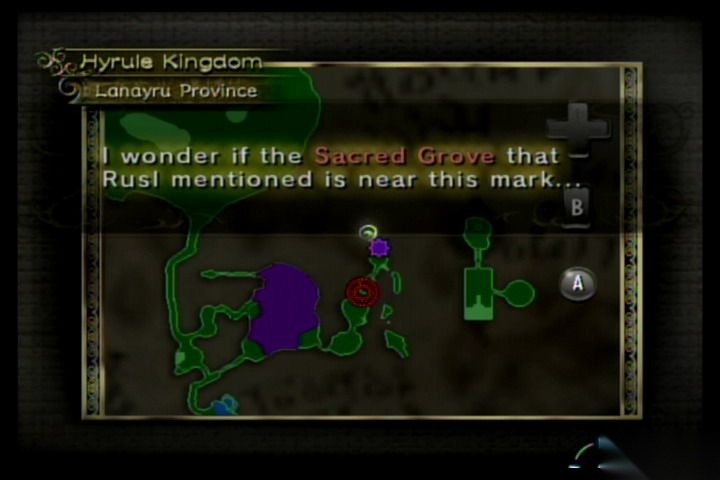
The opening of Chapter 6 is about making sense of an artifact that looks useful before it becomes fully active. The guide's pacing here is intentionally archaeological: the player is reconnecting scattered clues, statues, and old roads before the temple proper even opens.
Owls, Statues, and the Return Route
Much of the chapter's identity comes from the back-and-forth between overworld setup and temple access. Moving owl statues and reopening old paths turn the route into a chain of confirmation that Hyrule's lost machinery still obeys its old logic if the player can read it correctly.
Temple of Time Ascent
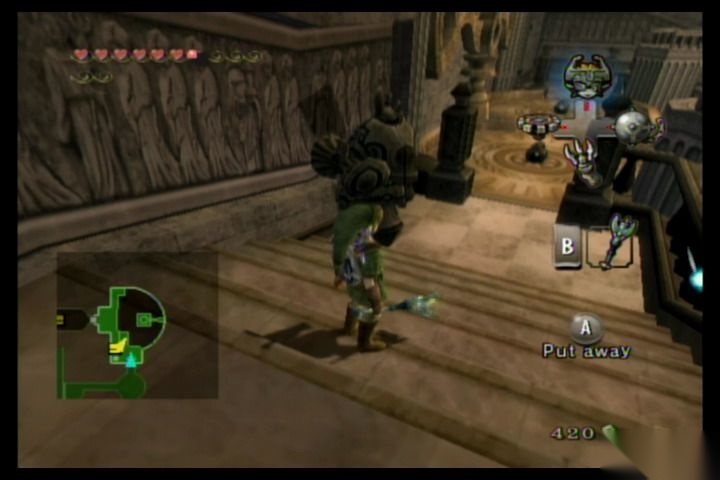
Inside the temple, the route becomes more formal and mechanical. Switches, statue control, and vertical puzzle rooms replace the emotional warmth of Snowpeak with a cleaner sense of ritualized progression, as if the player is climbing through a monument built to be traversed in a very specific order.
The Return Descent and Armogohma
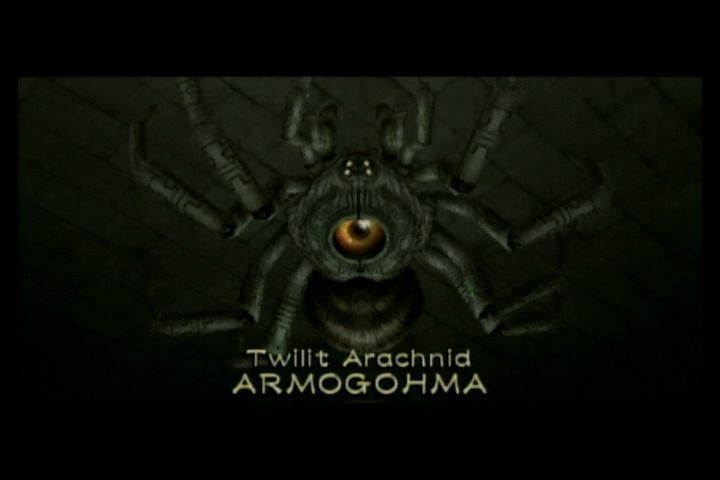
The return trip matters almost as much as the ascent because it proves the dungeon understands its own spatial design. Escorting the statue back down keeps the temple from feeling like a straight ladder, and Armogohma closes the chapter with a boss that continues the Dominion Rod's emphasis on controlled positioning.
Dungeon and Item Focus
The Dominion Rod is both the chapter's reward and its narrative centerpiece. Temple of Time is also notable for its repeated statue escort logic and for Armogohma, a boss encounter that continues the game's habit of using newly learned mechanics immediately.
Why This Chapter Matters
Chapter 6 matters because it is where Twilight Princess most clearly treats Hyrule as a civilization with long memory. The route is not just about acquiring another item; it is about proving that the old kingdom still shapes the present through relics, pathways, and dormant authority.
Screenshot Highlights
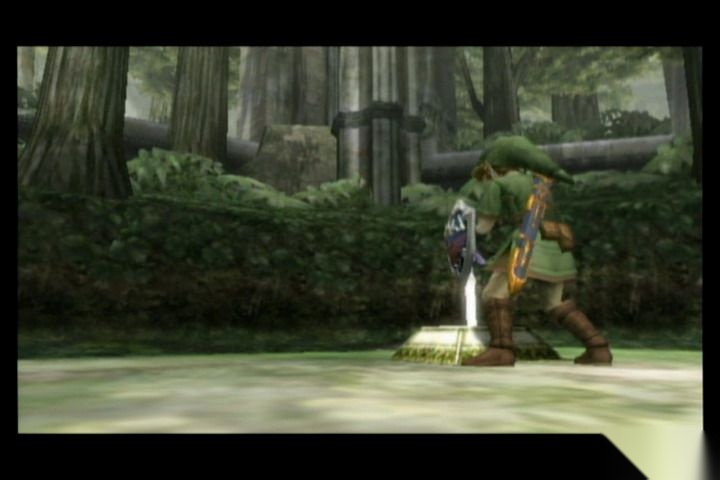
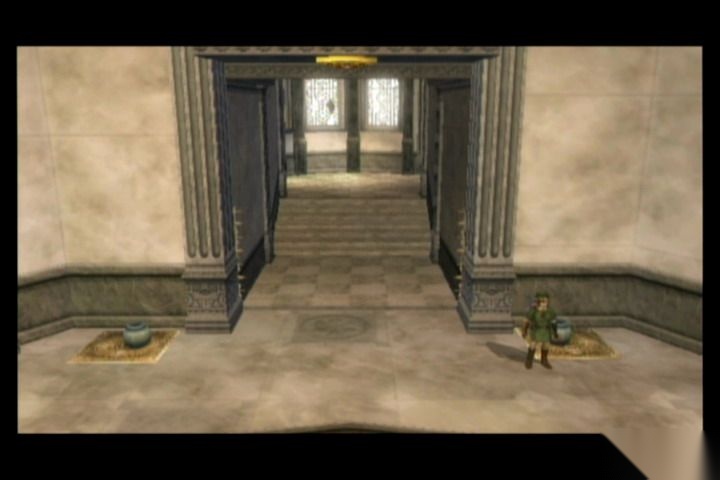
These screenshots focus on the Temple of Time's identity as an ancient-space chapter rather than a full room-by-room image log.